Home › Our latest news › Variable Message Sign vs Speed Indicator Device : Make the right choice


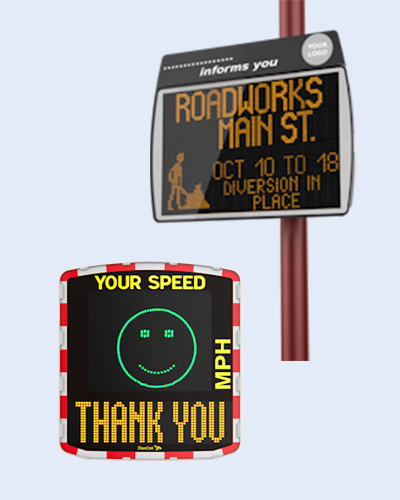
A variable message sign (VMS) is an electronic traffic sign designed to display changeable messages to drivers. Using bright LED technology, it delivers real-time information about road conditions, incidents, work zones, and traffic management instructions. These signs are a key component of intelligent transportation systems and are commonly found in tunnels, expressways, and car parks. They provide dynamic message guidance that enhances safety, reduces congestion, and supports real-time traffic management efforts.
VMS units are available in both fixed and portable formats, including trailer-mounted variable message signs and changeable message signs. These devices are integral to modern traffic management systems, such as national transportation communications networks and variable speed limit schemes.
Variable Message Signs (VMS) are electronic traffic control devices designed to display dynamically changing information to road users. Often mounted overhead or at the roadside, they typically use bright LED panels that remain visible in a wide range of light and weather conditions. Rather than being limited to a single, static instruction, these signs can be updated in real time to reflect evolving traffic conditions, incidents, or planned events.
VMS operate by receiving data from traffic management systems, sensors, CCTV feeds, and incident reports, allowing operators to update messages remotely. Common uses include warning drivers about congestion, accidents, and road closures; promoting safety messages such as speed reminders or seatbelt campaigns; and providing real-time travel times or alternative routes.
They are also widely deployed in construction zones, events, and emergencies, where they direct traffic away from hazards, guide pedestrians, and support evacuations. In addition to road applications, VMS are used in parking guidance systems and at large venues to manage arrivals, closures, and schedules.
Because VMS messages can be changed remotely, transportation authorities gain significant flexibility in responding to unexpected incidents or shifting traffic patterns without the cost and delay of replacing physical signs. This immediacy improves situational awareness and can help reduce travel times, secondary collisions, and congestion. The bright, high-visibility displays also enhance readability in low-light or poor-weather conditions, which supports safety and compliance.
Overall, VMS provide a cost-efficient, scalable way to communicate critical information quickly, helping to keep both traffic and people moving safely and efficiently.
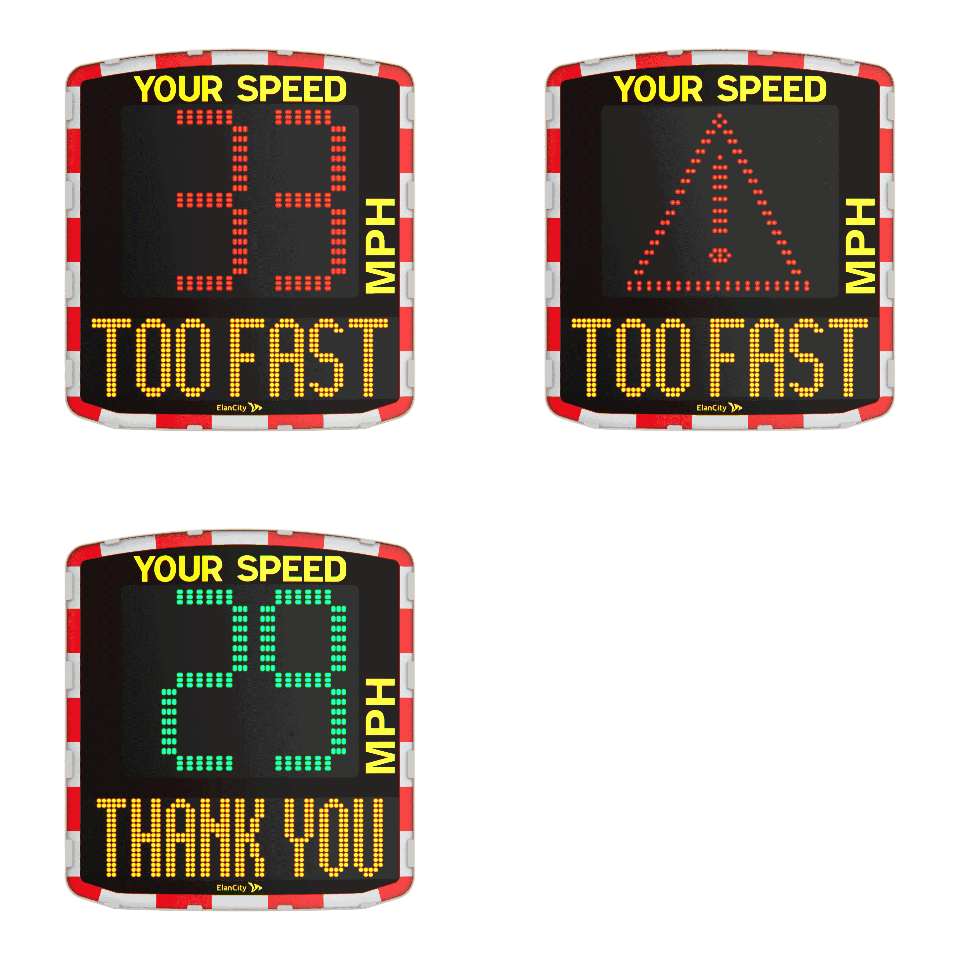
A speed indicator device (SID) is a traffic-calming tool designed to help drivers self-monitor their speed as they approach high-risk areas like school zones, sharp intersections, or pedestrian crossings. Unlike traditional radar speed signs that only display a vehicle’s speed, SID systems often include additional visual or behavioral cues to encourage drivers to slow down when they exceed the posted limit.
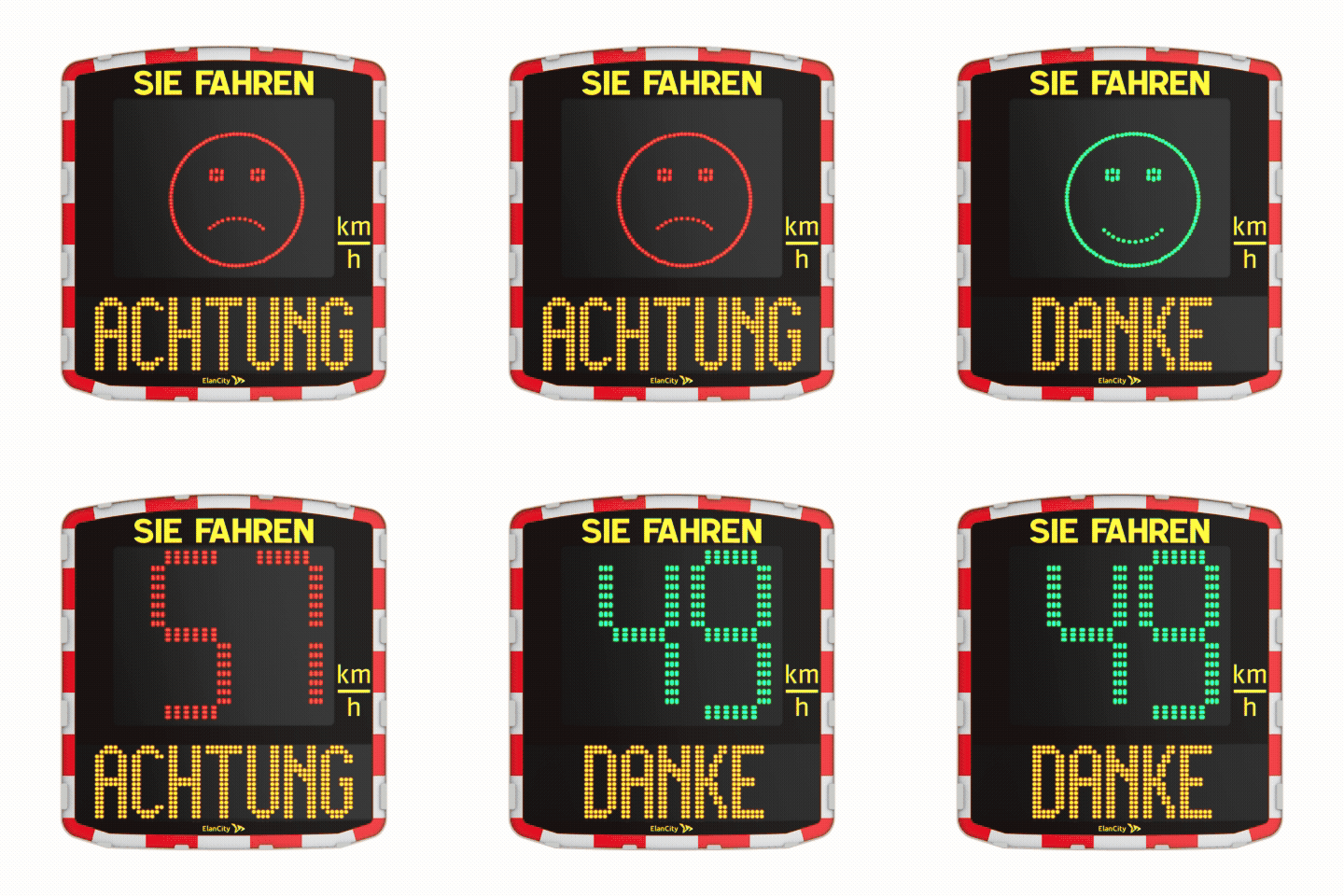
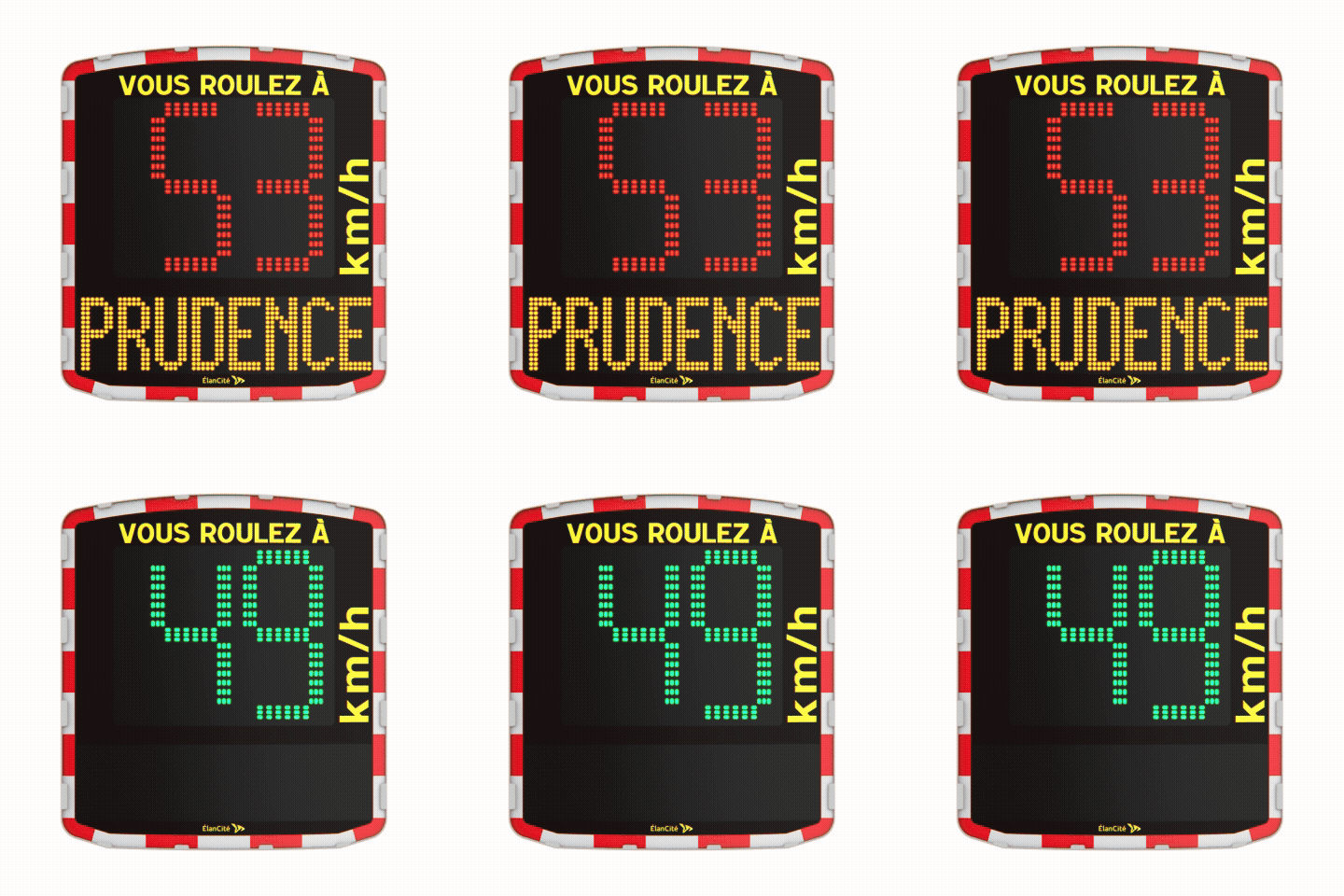
Typically mounted on a roadside pole, SID units use radar or similar sensors to detect vehicle speed and display it prominently on an LED screen. If a vehicle’s speed exceeds a pre-set threshold, the sign may flash, change color, or display a warning symbol such as a “smiley” or “frowning” face. This immediate feedback encourages drivers to adjust their behavior without any enforcement, effectively reducing speeds by a meaningful percentage in monitored areas.
Speed Indicator Devices work by detecting vehicle speed using radar or laser technology and comparing it to the maximum allowed speed for that section of road. When a vehicle is within the acceptable speed range, the device may display a friendly or neutral message, such as a green smiley face or a steady green light. However, if the vehicle is speeding, the sign typically flashes a red light or warning symbol and may display the speed in bold, red numbers to grab attention.
These devices are commonly deployed in residential neighborhoods, school zones, hospital areas, and near community parks, where vulnerable road users like children and the elderly are present. They are also used temporarily in construction zones or during special events to ensure safe traffic flow. Since many SID units are solar-powered and portable, they offer flexibility and can be relocated as traffic-calming needs change.
One of the main advantages of Speed Indicator Devices is their ability to encourage self-regulation among drivers. The real-time feedback makes drivers more aware of their speed, prompting conscious efforts to stay within the limit. Studies show that SID signs can reduce average speeds by several kilometers per hour, which significantly decreases the risk of accidents and the severity of injuries in case of collisions.
Another key advantage is that SID signs are non-punitive. They do not issue fines or record driver data, making them popular in communities concerned about privacy and surveillance. This also makes them easier to install and gain political acceptance, as they are often seen as a community-oriented tool rather than an enforcement mechanism.
From a practical perspective, SID signs complement other traffic-calming measures such as speed bumps, signage, or road narrowing. They are particularly effective in areas with limited enforcement resources, providing a low-cost alternative to continuous police patrols. Over time, repeated exposure to SID signs can help change driver behavior, fostering a safer and more predictable traffic environment for all road users.
When deciding between a Vendor Management System (VMS) and a Supplier Information Dashboard (SID), leaders must look beyond the core functionalities and consider how each solution fits into their broader operational and strategic landscape. A VMS typically centralizes the entire staffing-and-procurement lifecycle, managing requisitions, candidate sourcing, time-and-expense tracking, and invoicing within a single platform. In contrast, an SID functions more as a high-visibility oversight tool, aggregating supplier-level data, performance metrics, and compliance status into intuitive dashboards that support decision-making rather than day-to-day transaction management.
Because of these different roles, a VMS often proves more suitable for organizations that need to streamline end-to-end processes, enforce rate-card governance, and drive cost control across a large supplier panel. On the other hand, an SID excels when the primary need is to monitor supplier performance, assess risk exposure, and track compliance in a way that is easily digestible by finance, procurement, and peer business-unit stakeholders. Recognizing this distinction helps frame the decision not as “which tool is better,” but as “which tool aligns with our current priorities and constraints.”
One of the most fundamental factors is the maturity of existing supplier governance. Organizations that lack clear SLAs, standardized metrics, or documented supplier-risk policies may benefit first from implementing a VMS, which can enforce consistent workflows and data capture. Once processes are stabilized and data quality improves, an SID can then act as a complementary layer, surfacing insights that help refine supplier selection and renegotiate terms.
Another key consideration is integration complexity. A VMS usually requires deeper integration with HRIS, payroll, ERP, and time-tracking systems to operate effectively, which can increase implementation time and dependency on internal IT. An SID, by contrast, often consumes data from existing sources and focuses on visualization and reporting, making it faster to deploy and less disruptive to operational routines.
For organizations operating under tight timelines or limited IT bandwidth, an SID may therefore be the more practical first step.
Cost structure and total-cost-of-ownership also differ. VMS licenses typically follow a per-end-user or per-transaction model and can scale up as the managed spend grows, which may align with long-term growth plans. SIDs, meanwhile, may be less expensive to license but depend on clean, well-structured data feeds; if upstream systems are disjointed, the investment in data plumbing can offset initial savings.
Leaders should model both short-term adoption costs and long-term operational costs, including the effort required to maintain consistent supplier data and resolve discrepancies.
Finally, security and governance expectations must be weighed. Because a VMS often becomes the primary system of record for contingent-workforce data, it typically requires robust access controls, audit trails, and data-protection measures.
An SID, while not usually the source of truth, still aggregates sensitive information such as supplier performance, financials, and risk flags, so it too must be governed carefully. Organizations under stringent regulatory regimes may therefore favor a VMS that can enforce role-based permissions and compliance checks end-to-end, with an SID layered on top for executive visibility.
A VMS is best positioned to deliver value when the primary challenge is process fragmentation. For example, in large enterprises with multiple requisition channels, dozens of suppliers, and inconsistent time-capture methods, a VMS can unify workflows, standardize documentation, and automate approvals and invoicing. In this scenario, the goal is not just visibility but operational discipline: reducing cycle times, improving time-to-hire, and minimizing billing errors and disputes.
Another strong use case for a VMS is in environments where contingent-workforce spend is growing rapidly and must be tightly controlled. By embedding rate-card governance, competitive bidding, and spend analytics into the requisition lifecycle, a VMS can help organizations benchmark against market rates, enforce negotiated terms, and identify opportunities for supplier consolidation.
This is particularly relevant in highly competitive industries where labor-cost volatility directly impacts margins.
An SID, on the other hand, shines in situations where stakeholders already have confidence in their underlying processes but need richer, more accessible insights. For example, procurement leaders who want to present supplier-performance dashboards to finance or operations may find an SID accelerates decision-making without overhauling the current workflow. In this scenario, the SID acts as a “single pane of glass” across supplier-facing activities, enabling quick comparisons of quality, cost, and reliability and supporting more informed strategic choices.
Additionally, an SID can be especially valuable during merger-integration or outsourcing transitions, where leadership must assess the health and risk profile of multiple supplier portfolios simultaneously. Because the SID excels at aggregating and visualizing KPIs such as fill-rates, turnaround times, and compliance incidents, it can highlight underperforming suppliers or concentration risks that might otherwise be obscured by siloed data.
This makes it a powerful tool for scenario planning and renegotiation, even if the underlying transactional work still flows through a separate VMS or other platforms.
The Speed Indicator Device (SID) stands out favorably from the Variable Message Sign (VMS) due to its ability to provide immediate and personalized feedback to drivers. Unlike the VMS, which displays general messages, the SID directly indicates the vehicle’s speed, enhancing its deterrent effect and encouraging better speed control. This helps reduce speeding and improves road safety. To maximize its impact, it is essential to deploy it strategically and ensure regular maintenance. Adopting this device is a concrete step towards protecting the lives of road users.
A Variable Message Sign (VMS) displays changeable traffic information, such as incidents, lane closures, detours, or speed limits. These signs are often remotely controlled to adapt to real-time conditions. In contrast, a Speed Indicator Device (SID) uses radar to measure an approaching vehicle’s speed and displays it to encourage drivers to slow down.
To summarize: VMS informs, while SID warns about driving speed.
Opt for a Variable Message Sign when you need to communicate broader, dynamic information, such as detours, closures, emergencies, events, safety campaigns, or variable speed limits. On the other hand, a Speed Indicator Device is ideal if your primary goal is to show drivers their current speed and encourage immediate slowing at a specific location.
Yes, a Variable Message Sign can display speed limits alongside warnings and directions. These signs are designed for dynamic traffic control, allowing them to show real-time messages such as accidents, congestion, roadwork, route changes, lane closures, and variable speed limits.
By providing timely updates, VMS helps drivers respond quickly to changing road conditions, enhancing safety and traffic flow.
For improving driver compliance and road safety, a dual-facing AI dashcam is often the better choice. It detects risky behavior, captures road and driver footage, and supports coaching to enhance driving habits. However, if your needs are simpler—such as basic tracking or monitoring for teen drivers—a OBD-II GPS device may suffice.